 Brondby Hub
Recent Tactical Trends at Brøndby IF
As Brøndby IF continues its campaign in the league, recent matches have provided a revealing glimpse into the team's tactical identity. With a blend of youth and experience, De Gule have showcased moments of brilliance, but inconsistency has hampered their ability to mount a sustained challenge for the title. A closer examination of their tactical approach reveals both promising patterns and areas ripe for adjustment.
Formation and Shape
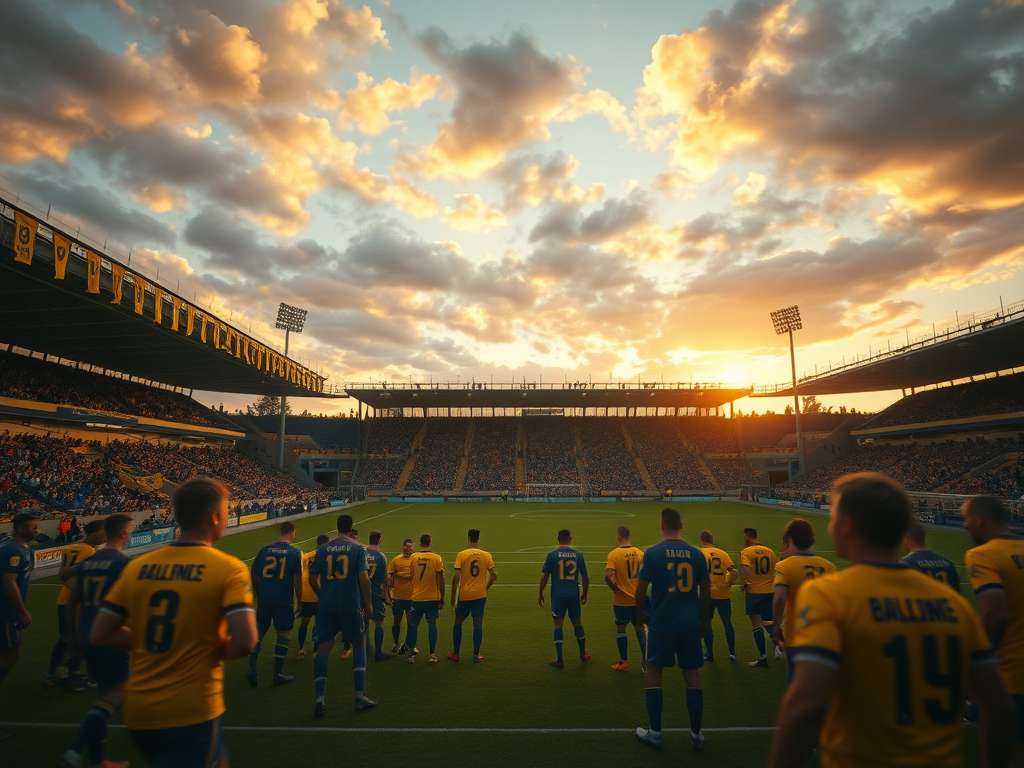
Brøndby has predominantly employed a 4-3-3 formation, which allows for flexibility in both attack and defense. The three-man midfield has provided a robust platform for ball retention, while the wingers have utilized their pace to stretch opposing defenses. However, in recent fixtures, there has been a noticeable tendency for the midfield to become congested, particularly when transitioning from defense to attack. This often results in a lack of fluidity, stifling the attacking momentum that the team relies upon.
To address this, a slight tweak to a 4-2-3-1 formation could prove beneficial. By deploying two deeper-lying midfielders, the team can ensure greater stability while also providing more options for progression through the midfield. This change could facilitate quicker transitions and allow the attacking trio to exploit spaces more effectively.
Exploiting Width and Depth
One of Brøndby’s strengths has been the ability to utilize width effectively through overlapping full-backs. However, there have been instances where the wingers have drifted inside too frequently, leading to a congested central area. Encouraging the wingers to maintain wider positions could open up the pitch, creating space for overlapping runs from the full-backs. This tactical adjustment would not only stretch the opposition but also enable Brøndby to exploit the flanks more effectively.
Additionally, introducing a more dynamic movement off the ball, especially from the forwards, could help in drawing defenders out of position, allowing for more penetrative passes into the box. The likes of Ali Al Najar, with his vision and creativity, could thrive in a system that emphasizes swift ball movement and intelligent off-the-ball runs.
Defensive Solidity
Defensively, Brøndby has shown resilience but has also been susceptible to counter-attacks. Opposing teams have exploited spaces left by advancing full-backs, particularly during transitional moments. A potential tweak here could be to instruct the full-backs to be more conservative in their attacking forays, ensuring that at least one of the two central midfielders is positioned to cover when the team loses possession. This would enhance defensive stability and reduce vulnerability to quick counter-attacks.
Moreover, a focus on pressing intensity could be refined. While pressing high can be effective, it is crucial to maintain balance to avoid leaving gaps for the opposition to exploit. A more structured pressing approach, with designated triggers for when to initiate pressure, could yield better results without compromising defensive integrity.
Conclusion
In summary, while Brøndby IF has showcased an exciting style of play, refining their tactical setup can enhance their performance in crucial matches. By adjusting their formation to a 4-2-3-1, encouraging width from the wingers, and solidifying defensive cover during transitions, De Gule can enhance their competitiveness in the league. As the season progresses, these tactical tweaks could be the catalyst for a more consistent and formidable Brøndby side.